Monday, June 4, 2018

New Religion & Pop Culture Projects on the Horizon!!!


Summer is a great time for new projects! Working on a couple of fun ones... stay tuned for more!
#weirdreligion
#keepreligionweird
#makereligionweirdagain

Tuesday, May 1, 2018

Wild Wild Country Revisited


I recently wrote short reflection on Wild Wild Country for Christianity Today. There's only so much you can cover in a magazine article... I still have so many questions after watching this fascinating depiction of the events in my home state of Oregon!

Here are a few:

***Fair warning: these are pretty nerdy. Definitely the kind that keep religion scholars up at night.***

What counts as "authentic" religion? Religion scholars problematize this term, but the town of Antelope, the State of Oregon, the federal government, and the followers of Bhagwan were very invested in whether or not Osho and his followers were participating in a really real religion.


What constitutes appropriation? Westerners have long been accused of appropriating practices, philosophical ideas, etc. from the "mystic East." Are the large groups of white Americans and Europeans attracted to Rajneeshpuram part of the New Age appropriation of Indian practices? If not, how would we categorize Bhagwan's efforts to create a 
mash-up of asceticism and materialism; “East” (defined in a number of ways in the film) meets “West” (a term with many meanings and uses in the film); spiritual and carnal?


What makes American religion, American? Entrepreneurialism? Capitalism? Celebrity? Religion scholars often note that Americans are very enthusiastic religious innovators. Does Wild Wild Country show us anything about what makes for a successful or unsuccessful religious innovation? Does it show us anything about why Americans seem so attracted to new religious movements?


What are the limits of charismatic authority? Whether you consider the real charismatic leader to be Bhagwan or Sheela, there's no doubt that the two are using charisma as a source of authority... but what are the limits of that power? Sheela and Bhagwan both test the limits in their own ways until they eventually break.


How does space shape religion in the USA? The rugged landscape, culture, and politics of Central Oregon surely played a role in shaping the practices of the Rajneeshees. How does space continue to shape other groups, whether it be rural or urban, contemporary or colonial, large or small?


This is just a start! The fun of watching Wild Wild Country is that it invites so many layers of questions upon questions.

Saturday, December 30, 2017

How to Read Academic Texts


Academic reading is a specific skill. It's a lot different than savoring your favorite novel or poem. It requires speed, precision, and critical thinking. But, once you acquire this skill, you'll be well-equipped for life as a student. Need help learning how to read academically? My mentor Kathleen Flake has just the tips for you!

(printed with permission from Kathleen Flake)

Academic material is not meant to be read. It is meant to be ransacked and pillaged for essential content. This means that you should never just sit down to read academic works as if they were novels or magazine articles. Academic study is not suited to such an approach, and the chances are you could spend hours reading and then not have a clue what you have been reading about (does that sound familiar?).

Rule #1 Never read without specific questions you want the text to answer. If you want your reading to stay in your memory, you must approach your text with a list of questions about the particular information you are after, and search the text for the answers to those questions. Don't just read with the hope that an answer will appear.

Rule #2 Never start reading at page 1 of the text. If there is a summary, a conclusion, a set of sub-headings, or an abstract, read that first, because it will give you a map of what the text contains. You can then deal with the text structurally, looking for particular points, not just reading ‘‘blind'' and so easily getting lost. Always keep in mind what you need, what is relevant to the question you are asking the text.

Rule #3 Think critically as you read. In reading academic texts you need to develop a personal (but nevertheless academic and rational) response to the article/ theory/ chapter through
(1) developing an understanding of the content and
(2) evaluating and critiquing the article. Therefore, before reading a text closely, read the introduction or abstract and skim read the text to give you a preliminary idea of what it is about. Then read it closely and critically. Some questions to help you read critically are:
a. What are the main points of this text?
b. Can you put them in your own words?
c. What sorts of examples are used? Are they useful? Can you think of others?
d. What factors (ideas, people, things) have been included? Can you think of anything that has been missed out?
e. Is a particular bias or framework apparent? Can you tell what 'school of thought' the author belongs to?
f. Can you work out the steps of the argument being presented? Do all the steps follow logically?
g. Could a different conclusion be drawn from the argument being presented?
h. Are the main ideas in the text supported by reliable evidence (well researched, non-emotive, logical)?
i. Do you agree or disagree with the author? Why?
j. What connections do you see between this and other texts?
k. Where does it differ from other texts on the same subject?
l. What are the wider implications——for you, for the discipline?

Rule #4 Treat critical reading as a skill which can be developed through practices, such as:
a. Taking notes of the text's main ideas and adding your own responsive comments.
b. Talking to others about what you have read.
c. Relating a given text to others in the syllabus by identifying similar or contrasting themes.
d. Explaining what the text means to a non-specialist and noting what you would have to add to make it intelligible? (This will help you to see the underlying, unstated assumptions.)
e. Asking yourself: "Is it possible to disagree with any of this?"
f. Asking yourself: 'How can I convince my peers/teachers that I understand what this is about?'

Thursday, August 31, 2017

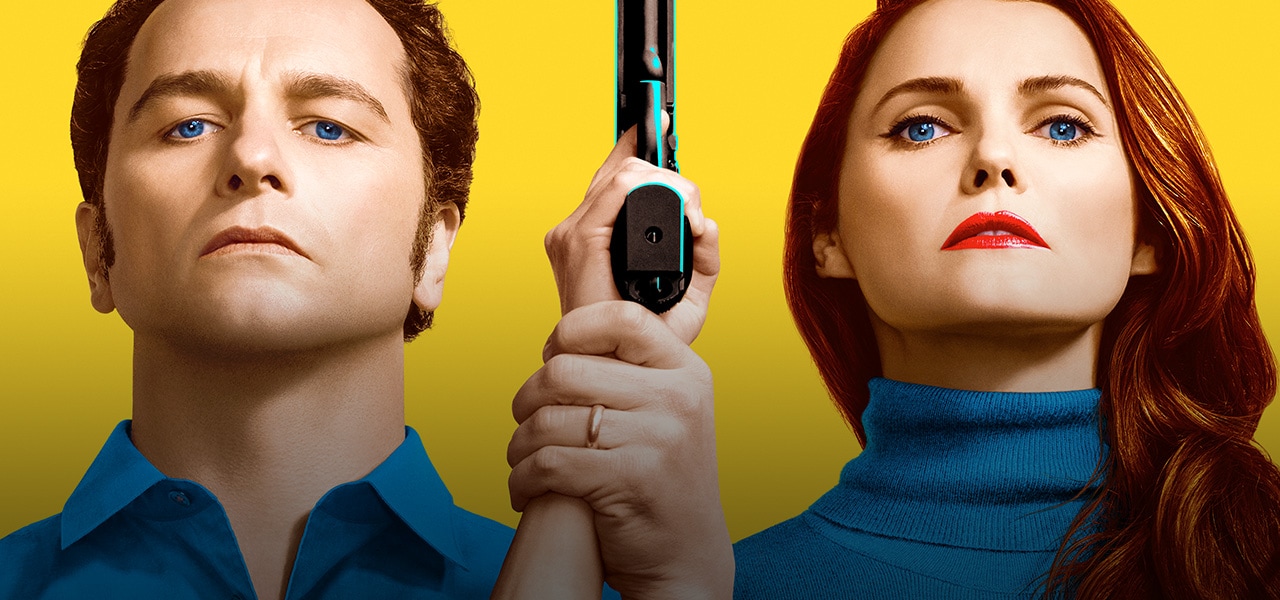
Bingeworthy: The Americans


"Only duty and honor are real, Mischa. Isn't that what we were told?"
Irina in The Americans

Happy Fall Semester, Friends!

This summer has been a whirlwind. I spent a week studying theology with a bunch of high school students, enjoyed a weekend thinking about the American church & public life with a bunch of pastors, visited my alma mater, and remodeled a 1950s bungalow. AND of course I watched Wonder Woman. Amidst the chaos, I managed to write a bit and get some research done. But I am way, way behind on t.v. watching and recommending! Mea culpa.

This spring I'll be teaching American Church history, and to prepare for it, today's post is about one of my recent favorites: The Americans.

At first glance, The Americans - a show about deep-cover Soviet spies in the 1980s who try to undermine the U.S. government while living under cover as a "normal" American nuclear family in Washington, DC -  might seem like a strange choice for class about Christianity in America. But The Americans offers watchers an opportunity to think about Civil Religion, a key concept in American religious studies, from a distinct point of view.

The term American civil religion describe the rituals, holidays, cultural events/places/spaces drawn from our national history that create a religion of America. This religion has key beliefs ("all men are created equal," citizens are guaranteed "life, liberty, and the pursuit of happiness) that amount to a kind of orthodoxy, and key practices (saluting the flag, standing for the national anthem, observing Independence Day, etc.) that are a kind of orthopraxy. The idea is that to be American, one must participate in the beliefs and practices of American civil religion.

The Americans offers us a chance to observe American civil religion from the perspective of those who believe that this religion is unorthodox and in fact a great evil that must be fought at any cost.... or is it? Through the eyes of "Elizabeth" (aka Nadezhda, played by Keri Russell), we see someone who works to maintain a purist vision of the Communist Party, and who is and disgusted by the materialism, comfort, and social injustice that surrounds her. Her partner/husband "Phillip" (aka Mischa/Mikhail, played by Matthew Rhys), on the other hand is not so sure. He finds that he actually enjoys American culture and he is reluctant to leave the life he has built there. After all, what's so bad about Coca Cola & McDonald's (this is the 80s - people don't hate these institutions yet)?

The Americans is about intrigue and global political strife, and it stands up very well as a political thriller. But it is most interesting when it parses out the tensions between Elizabeth and Phillip as they wrestle with whether or not they have been fully baptized into American civil religion. Elizabeth believes that her convictions (coupled with her brutal ability to extinguish human life on behalf of the Soviet Union) are enough to create a distinction between herself, her children, and American civil religion. The equally ruthless Philip wonders if the practice of being American has made him, and indeed their entire family, true believers.

What does it mean to be religious? Is religion about beliefs? Or practices? And what does it mean to be American? Is it enough to have citizenship, or must one convert? These questions and more are at the heart of one of my favorite summer binges.

Thursday, January 26, 2017

Weekend Watching: Gaslight


"You're slowly and systematically being driven out of your mind."
Joseph Cotton as Brian Cameron in Gaslight

The term "gaslighting" has been making the rounds in American political discourse. My advice? See this classic film. 

Gaslighting, which is synonymous with manipulating a person or group into thinking that they are going out of their minds, comes from a classic play Gas Light that has been adapted to film twice. The 1944 version of Gaslight, staring the incandescent Ingrid Bergman, is my favorite. 

Bergman stars as Paula, a troubled young woman who witnessed her aunt being murdered as a child. As an adult, Paula is caught up in a whirlwind romance, gets married, and is now living with her new husband in relative isolation. Unfortunately for Paula, her happiness in love is short-lived. Soon, she begins seeing and hearing things... a creaky floor, a flickering gaslight. Her husband assures her that she's mistaken. Eventually Paula begins to think that she is going mad. But is she? 

Gaslight explores psychological abuse in a creepy, personal way. Watch it and you can decide for yourself whether or not it is a good metaphor for the state of our body politic.

Friday, January 20, 2017

Bingeworthy: Rectify

 "At the least I feel that those specific coping skills were best suited to the life there, behind me. I doubt there will serve me so well for the life in front of me, so I will seriously need to reconsider my world view." 
Daniel Holden in Rectify

Last week, I mentioned the glacial pace of one of my favorite shows, Rectify. Rectify, a moody, dreamy Southern Gothic drama about a man who is released from prison after serving 19 years for a rape and murder he may or may not have committed, moves at the pace of a humid Southern town in August. There is plenty of time to watch Daniel Holden struggle with life outside his cell walls and to watch his family struggle to reintegrate him into their web of relationships. And, there's ample space to enjoy sunset and fireflies and classic drawls (Clayne Crawford's Alabama roots shine in his spot-on performance as a Southern frat-guy character Ted Talbot Jr.).  

There are also many opportunities to consider the nature of justice, redemption, conversion, and repentance. How does a man who will always be connected to a terrible crime find forgiveness or freedom? Daniel struggles to attain both. How does 'hope deferred' change a person? Daniel's fiercely loyal sister Amantha, who worked for her entire adult life to secure his release, struggles to find meaning in her life. For those interested in conversations about whether or not the criminal justice system should be retributive or restorative, Rectify gives viewers a meditation on what imprisonment does to a human soul. And, there is one scene - a classic tent meeting complete with gospel choir and baptisms - that captures the enthusiasm and earthiness of revivalism in the American South. 

If you want a visual treat, a thoughtful discussion of justice and love, and an immersion into Southern religion, try Rectify.

Friday, January 13, 2017

Weekend Watching: The OA


There are certain things that I know I should like, but I just can't. Like sushi (not cosmopolitan enough). Or hiking (not outdoorsy enough). Or craft beer (not hipster enough). The OA falls under that category. The premise is this: a young woman, Prairie Johnson, makes a dramatic reappearance in middle America after disappearing for seven years. Her parents are anxious to welcome her back to her old life, but there's something very different about her this time around. For one thing, she used to be blind but now can see. For another, Prairie insists that she be called The OA. Mystery surrounds this woman and soon she attracts a ragtag group of followers who are fascinated by her storytelling abilities.

I could go on, but I'll just stop there. You know, dear readers, that I am a fan of this genre. But in order for a high concept show like this one to work, a viewer needs to be able to buy into that concept (or even just understand what it is) by the time the first episode concludes. The OA doesn't provide any such narrative structure. Without a story core to hold it together, we at least need some snappy dialogue or chemistry between characters to stay with it. But, the pacing of The OA is slow. Glacial. And, I can handle slowly paced television (Rectify is one of my favorites!).

It's really a shame because The OA plays with a lot of themes that historians of religion appreciate. The idea that a story can change the world, change history, and change the hearer in a fundamental way has rich potential. And, The OA herself - a fragile woman with mystical powers and reluctant but mesmerized followers - almost makes me want to watch a season 2. Am I missing some way to frame The OA that will help me recognize its greatness? You tell me.

Friday, January 6, 2017

Weekend Watching: Travelers

"We, the last and broken remnants, vow to undo the errors of our ascendants, to make the earth whole, the lost - unlost, at peril of our own birth"
Time Traveler's version of a Hippocratic Oath in Travelers

It's a classic dystopian sci-fi premise: humans in the future ruined the earth and it's up to an intrepid time traveler(s) to set the world right years before it goes wrong. In Travelers, they do it by using tech from the future to digitally override the brains of people in the 21st century who are about to die. But is it moral to override someone who is about to die, but is not quite dead yet? And when do you know that you've saved the world? What if saving the world means losing your very existence? The characters in Travelers wrestle with these questions as they work to redeem the world, one mission from the future at a time.

Travelers is theoretically right up my alley, but I'll admit that I was slow to appreciate the show's charms. Its stars are a bit too inexplicably attractive (which for some reason works for me on CW shows but doesn't work elsewhere); it stars Eric McCormack, who is a good actor, but I will always see him as Will from Will and Grace; it's also pretty humorless... I can handle bleak (in fact, some of my favorite shows are uber-depressing... ahem, Battlestar Galactica), but bleak is only bearable with a few laughs every now and then.

The final episodes pick up the pace, however, and they start asking some better-than-run-of-the-mill sci-fi questions. Such as, where and what is God in this future world? Does fixing the future eliminate free will? How do we know we can trust the powers that be in the future? And what would it take for the future people to become so attached to the present that they forget their vow to undo the errors of their ascendants? In the end, I found that the quality of Travelers increased along the way. And the questions they asked made the binge-investment worthwhile.

Thursday, December 29, 2016

See You in the New Year!


Friends, if you follow me on Instagram, you know that I've had a family emergency that has taken me offline for the past couple of weeks. I'm going to be spending the rest of 2016 with the ones I love the most, but you can expect to see me back in action with more commentary and reviews on bingeworthy classics and new winter shows in the New Year!

Friday, December 16, 2016

Finals Week: Grading Music!


Finals week: the time of year when I wear headphones and spend a LOT of time in front of a laptop. From the moment I saw Lin-Manuel Miranda's performance of Alexander Hamilton at the White House in 2009, I knew Hamilton: an American Musical would be one of my favorite finals week obsessions. There are a thousand reasons why Hamilton is a joy for fans of history, musical theater and hip-hop (and for anyone with ears), but there is a lot for students of religion too.

For one thing, Hamilton is a mediation on Providence. In the opening number, we meet Alexander Hamilton - a brilliant but penniless orphan who immigrates to what would become (due in part to Hamilton's powerful writings and political maneuverings) the United States. Why was he born with so few resources and did his tragic, destitute beginnings make him into the tenacious, creative force of nature whose ideas helped create the world as we know it? Was it divine intervention or chance?


Later in life, Hamilton meets his nemesis (and [spoiler alert!] his killer), a privileged, wealthy young Aaron Burr. The two have a Mozart-Salieri type of relationship: Burr cannot understand what makes a man like Hamilton tick. And (in one of the most tightly-written songs you will ever hear), he questions his own more hesitant nature, his place in the grand scheme of life, and what questions Christianity can and can't answer in Wait for It. 


In Who Lives, Who Dies, Who Tells Your Story, we get a poignant, understated musical finale that self-consciously critiques how we tell the story of our Founding Fathers (e.g. where are the Mothers?) and invites us to think about the afterlife in terms of legacy. Who makes sure that Hamilton lives on? Who gets to tell our stories? Do we live forever if they are told well?


SO while I'm finishing out the semester, chances are, I'll be listening to Hamilton... are you obsessed with Hamilton or some other record? Write me and let me know what I should be putting on my end-of-the-term playlist!

Friday, December 9, 2016

Bingeworthy: 7 Reasons Why We Need Another Buffy the Vampire Slayer (religion scholar listicle!)


There are certain shows that you just have to watch more than once (more than ten times?). The more nuanced the show, the more you need to watch it. Buffy the Vampire Slayer is at the top of most religion scholars' lists. Here's why we (the entire religious studies guild... I speak for all of us) need another Buffy!!!

1. Elegant storytelling: There are tons of great shows that draw theologians' attention (The Walking Dead, Breaking Bad, & Mad Men to name a few), but none of them beat Buffy for its simple premise and quality execution. A Big Bad wants to destroy the world. Only Buffy can save it. A simple story allows for a lot of nuance and creativity along the way (musical episode, anyone?).

2. Campy villains: We loved to hate the Big Bads, didn't we? They were always bad but still funny and they hammed up every scene. Villains today (even on shows I enjoy like Jessica Jones or Daredevil) can be scaaaaaary but they tend to be (mostly) humorless. We need another Caleb, the cheerful, creepy, misogynist, axe murdering priest (also: Nathan Fillion)!

3. Gender scholars need a muse: Feminists loved (LOVED) Buffy. She's strong! She's a woman! Bella Swan from Twilight and the (slightly less frustrating) Elena Gilbert from The Vampire Diaries are tired throw-backs to the damsel in distress. We can't leave all of the supernatural heroics to Sam and Dean Winchester!

4. It's time to revive some 90s fashion trends: Chokers are totally on point. As are overalls on grown women. And scrunchies! Let's bring those back. I think I've still got my awesome homemade scrunchy collection at my parents' house.
Yours Truly circa 1993 wearing ALL the 1990s trends you can fit on a 16 year old girl 

5. And slang too: What's your damage? Don't go all Dawson's Creek on me. I can't even deal with Destructo Girl. (that was just a fraction of the awesome slang from the "D" entry in Slayer Slang: a Buffy the Vampire Slayer Lexicon).

4. Academics need to justify their t.v. watching: There are philosophical, theological, linguistic, etc. treatments of Buffy. Just do a Google Scholar search and you'll see that the academic takes on the show are endless (as are the scholarly puns... we really need to put a stake in those, guys. Seriously).
Screenshots of just two of the many, many, many Buffy articles on Google Scholar


5. We need more accessible discussions of BIG ideas: Want to talk about the nature of good & evil? Of life? Of death? Of destiny? Stick with Buffy. You'll end up thinking about fate a lot, developing mixed feelings for Spike, and you'll tear up (if not all-out messy cry) when one sympathetic character dies in "The Body" (season 5, ep 16).


6. David Boreanaz: (What? Like you weren't thinking it?)

7. Cool librarians!!! Most of the nerds on t.v. these days are science-y. They are usually computer experts or crime scene investigators. Their main function is to provide blood spatter analysis or hacking. Giles the Watcher/Sunnydale librarian rescued the world with his knowledge of ancient pagan myths, and art, and literary themes; in other words the humanities. We need a show with a lead who saves us with Socrates!

Friday, December 2, 2016

Weekend Watching: The Invitation


"Each and every one of us is on a journey. And we feel that it's important to be on that journey with the people you love."
David in The Invitation

A few years ago I watched the haunting PBS documentary Jonestown: the Life and Death of Peoples Temple. Told with interviews, film, and audio records, viewers experience a beautiful utopian dream slowly twisting and turning into a (now infamous) death cult. What must it have been like to witness the descent of the Peoples Temple? What must have been like to be a member? Would you know that you were being groomed for death? Would you feel the dread immediately or would it slowly, subtly build in your subconscious? 

In The Invitation, an eerie, suffocating thriller-horror film, the lead character Will (Logan Marshall Green) may or may not be about to find out. Will and his new girlfriend Kira (Emayatzy Corinealdi) have been invited to a dinner party with old friends in a ritzy Hollywood home. Kira is eager to enjoy the evening, but Will is on edge. He's leery of the new peace that his fragile host (and ex-wife) Eden seems to have found with a group of devotees to spiritual guru "Dr. Joseph," (including the mesmerizing, menacing David (Michiel Huisman)). As the dinner progresses, Will's anxiety and paranoia increase. Is Will right to be this suspicious? The more we learn about the tragic history of this group of friends, the more we wonder whether or not Will's perspective can be trusted. And yet, something seems off about the house, its inhabitants, and the tranquility they seem to have found with Dr. Joseph....

The Invitation is a frightening psychological thriller. And its setting in Hollywood invites us to ask all sorts of good questions about new religious movements and class. Why is it that privileged folks in the American West, like those in this film, are drawn to religious innovations? The Invitation is fictional but there are many, many real-life examples of wealthy folks who join religious organizations like Scientology or Heaven's Gate. Why is it that having it all in California leaves people so soul-empty? Why doesn't 'old time religion' fill the void? And what is it about the region that allows for so much spiritual creativity?

In addition to academic questions about religious movements, the emotional and theological questions raised by The Invitation about the relationship between religion and tragedy are worth asking. Should religion always relieve grief? Should it explain sorrow away? Should religion reframe suffering in light of new spiritual understanding? Humans seem more open to spiritual answers during seasons of grief. What if those spiritual answers are dangerous? Like Will, you may find more questions than answers in The Invitation.

Friday, November 25, 2016

Religion & Pop Culture Holidaze Edition


Holidaze: term that defines the feelings of confusion and excitement people have between Thanksgiving and Christmas; the blur one feels after/during shopping for gifts in crowded retail stores with heavy holiday traffic
- Urban Dictionary

Friends, this is the time of year when it's socially acceptable to listen to holiday music (I like it year-round but SOMEONE in my household makes me wait until after Thanksgiving). It's also the time when you might be looking for a little escape from the family - especially during this post-election insanity! I won't lie; I like a good, sappy Christmas movie as much as the next person. But what I love is a little bit of bite to my holiday watching. So, while you enjoy your leftovers, sneak away from the in-laws and try three of my favorite holiday-themed television episodes.

"A Very Supernatural Christmas"
Supernatural Season 3, ep 8
This Christmas treat is Supernatural at its monster-of-the-week best. Brothers Sam and Dean Winchester hunt the things that go "bump" in the night and protect the world from supernatural threats large and small (all while eating tons of pie and being exceedingly handsome). In this episode they are after a creature that appears to be devouring people who are decorating their homes with yuletide cheer. The brothers investigate undercover (per usual: as FBI agents with rock aliases) and they discover a truly depressing bad Santa, the legend of Krampus, and pagan threats much older than the first Noel. This episode is creepy, funny, and full of references to ancient pagan lore and its current Christianized forms. And, for Supernatural superfans, this show also includes some poignant flashbacks wherein we see what it was like for two motherless boys to be raised as hunters.  

"Regional Holiday Music"
Community Season 3, ep 10
For those of you who are not Community watchers, this is a weird, inventive show. It's also very snarky and "Regional Holiday Music," is a tour-de-force in holiday cynicism. The study group of lovable losers (Alison Brie, Donald Glover, Joel McHale, Gillian Jacobs, Danny Pudi, Yvette Nicole Brown, & Chevy Chase) at Greendale Community College is thinking about their Christmas plans when they are interrupted by Mr. Rad (played in over-the-top glory by SNL's Taran Killam), the Greendale glee club instructor who is recruiting students to participate in his annual Christmas pageant. The study group rejects him initially, but through a series of holiday-themed songs that target each member in nefarious ways, the group is lured into holiday joy. Chevy Chase's character Pierce cannot resist "Baby Boomer Santa," who seems to know just what to say to scratch his narcissistic, consumer-oriented, generational itch ("Pierce! They're just trying to pander to your demographic's well-documented historical vanity. Resist!"). Alison Brie's Annie tempts Joel McHale's Jeff with "Teach Me How to Understand Christmas." Annie's song begins as a send-up to "Santa Baby" and quickly devolves into gibberish ("Boopy Doopy Doo Boop Sex!!!"); it's one of the canniest deconstructions of sexy-baby-voice femininity you'll see. Add to that a nod to Jehovah's Witnesses who struggle through the holidays and a Fundie's discomfort with anything other than wishing someone a Happy Jesus' B-day, and you have a holiday treat!

"How the Ghosts Stole Christmas"
The X-Files, Season 6, ep 6
The slow burn chemistry that X-Files fans adore between the true believer Fox Mulder and skeptic Dana Scully is on display in this classic episode. It's Christmas Eve and FBI agent Mulder inadvertently drags his partner Scully to a haunted house in Maryland. Supposedly two lovers participated in a suicide pact there in 1917 and have been haunting the premises ever since. Trapped in a nightmarish bleak house, the two encounter some pretty scary early twentieth-century ghosts as well as a few phantasms haunting their working relationship. And, they do it with plenty of holiday cheer. No show blends humor and horror quite like The X-Files - especially the early episodes like this one.

P. S. If you find yourself still stressed after these eps, I recommend the Target parking lot. That's where I'll be.

Friday, November 11, 2016

Conferencing Dos and Don'ts

You never know who you will meet at AAR/SBL! My friend Melanie Trexler and I met the one and only (very gracious!) Cornel West in 2009.
And then William Young, author of The Shack attended one of my sessions.
It's that time of year again - time to fly across the country and join your fellow nerds at your guild's annual conference. For me and my kind, the Big One is the American Academy of Religion and Society for Biblical Literature's annual meeting (aka AAR/SBL). Once a year, thousands of religion scholars descend on an unsuspecting city and bring corduroy jackets (with elbow patches!), old-timey pipes, and all-around questionable fashion sense to discuss the latest trends in religious studies research. For first-timers, it's overwhelming!

For your first-timers (and long timers), I offer a few modest suggestions on how to make the most out of your academic conferencing experience.

Leah's Lucky 13 Conferencing Dos and Don'ts

1. Don't be fooled - the conference begins on the plane. You never know who will sit next to you on your flight. I recommend dressing in conference attire and having a stack of business cards with you at the airport.

2. Do bring comfortable shoes. I know, I know. I sound like your mother. But one year of walking around with blisters and a forced smile during your third late-night reception will cure you of your vanity.

3. Don't build your schedule entirely around paper presentations. There are a plethora of panels at large conferences and it can be tempting to spend your time jogging from one session to the next. But, a few years in and you'll find out that - with a few notable exceptions - most AAR-SBL panels are... boring. Painfully boring. And also pompous. Exceedingly pompous. Unless you are going to see a celebrity scholar or you are working on exactly the same thing as the panel you'd like to see, don't spend all of your time running after research papers.

4. Do be strategic when it comes to food and beverages. The line for Starbucks will be LONG. Happy hours in a 2 mile radius from the conference will be crowded. Plan accordingly.

5. Don't forget that much of the real business of conferencing gets done informally. So make sure you are prepared to stay out a bit and recruit some outgoing friends to go reception-hopping with you. Network!

6. Do give yourself permission to sleep in the day after a night of receptioning (this is a verb at AAR/SBL - I can assure you of this).

7. Don't take up too much of your scholarly crush's time at their university's reception. I learned this from a mentor of mine who will remain nameless. As gracious as many of them are, star scholars are usually at receptions to catch up with old friends, not to hear you talk for 25 min. about religion and 12th century Romanian folk art. So (unless told otherwise) introduce yourself, make an impression, and exit in less than 5 min.

8. Do remember that the religion scholar world is small... if you are gossiping at a hotel bar, you never know who is listening. You've been warned!

9. Don't get so nervous that you ignore normal social cues. Smile at people. Shake their hands. Laugh at their bad jokes. You get the idea.

10. Do take time to enjoy some local foods and take in some local sights. You never know who'll you will meet or when you'll be in that city again.

11. Don't forget to drink a lot of water. You'll thank me.

12. Do remind yourself that everyone feels insecure at these things. You aren't the only one; impostor syndrome is real. Take a deep breath and try to enjoy yourself.

13. Don't feel bad for playing hooky a bit with your friends. This time last year, while skipping out on a session, a casual conversation with Dr. Keri Day about a video of Paula White praying over Donald Trump led me toward my next research project (and predicted the bizarre political dystopia in which we now live). You never know what great ideas you'll get from talking to your brilliant friends!

Friday, October 28, 2016

Trick or Treating at Home? Housebound this All Hallows' Eve


Disclaimer: I thought about trying to make this post about religion & Halloween, but I gave up. Instead, I offer you a good horror story for your celebration of the Day of the Dead:

This year for Halloween I plan on dressing up and eating my weight in candy corn while I give sweets to my neighbor kids. If you, like me, enjoy creepy movies this time of year, add Housebound - a 2014 horror-thriller-slasher-comedy film from New Zealand - to your list.

The premise of Housebound is this: Kylie, a rebellious (and criminal) young woman has committed one too many robberies and she is sentenced to 8 months of dank and dusty house arrest with her mother Miriam and stepfather Graeme in the country. For a city girl with attitude problems,  8 short months with her doting mother and clueless stepdad feels like a boring eternity-worse-than-death.

Not to worry! Soon eerie things start happening in the house that pique Kylie's interest. She overhears Miriam calling in to a radio show to say that her house is haunted; creepy toys seem to follow her around the house on their own; a menacing next-door neighbor must be up to no good. Kylie enlists a the security contractor who oversees her ankle monitor to help her investigate. What follows are bloody, funny, and legitimately scary hijinks.

Like Scream, Housebound has just the right amount of humor and thrills. Like Cabin in the Woods, it riffs on standard horror stories and includes surprising twists. And as the plot unfolds, Housebound stands on its own as a weirdly sweet family comedy.

For fun and fright this Halloween, you'll want to stay in and watch Housebound.

Friday, October 21, 2016

Teaching with TV: Religion & Public Life according to Battlestar Galactica


What should a society do when faced with terror attacks? What should citizens do when the future of their government is uncertain? And what role should religion play in all of this?

These are tough and timely questions that should be asked and discussed in the classroom. Many educators are (understandably) nervous about facilitating theses kinds of discussions because any time an instructor takes on a controversial topic, s/he assumes a good deal of risk. Science fiction is a great vehicle for teaching controversial subjects like the role of religion in the body politic because it allows students to enter into a story and debate important issues in a non-threatening way; the society that they are discussing is far, far away from their own religious or political experiences. 

If you want to generate some fantastic discussion about whether or not religious values do/can/should influence society from heads of state to the average person, I recommend Battlestar Galactica (2004).
The premise of BSG is this: sometime in the not-too-distant future, humans create robotic technology (cylons) that develop consciousness and rebel against their creators. For years, humans and cylons war and eventually come to a truce. BSG begins when cylons break their longstanding peace and destroy the many planets on which humans live (12 to be exact). The only humans who remain are a rag-tag group of space ships led by a rickety old relic from the past war, the Battlestar Galactica.

How will humanity survive? How will it thrive? And will religion play a part in humanity's salvation? These questions (and many more) are at the heart of the series. As the last remnant of humanity flees from their enemies and searches desperately for a new home, socio-political and religious divisions abound. Wealthy people from the planet Tauron clash with the impoverished, oppressed planet of Sagittaron. Humans from the planet Gemenon cling devoutly to their polytheistic scriptures and prophecies about the future of humanity; politicians from the capital planet of Caprica are not so sure that the gods have anything to do with humanity's destruction or its future. And of course all of the humans have to wrestle with what it means to have human rights (and how those ought to be protected) if there is little to nothing distinguishing cylons from their creators.

The more detailed conversations students have about the intricacies of this sci-fi world, the more real-world connections they are able to make in their own contexts. Plus, it's a ton of fun. I dare you not to root for Starbuck, Apollo, & Co. So say we all!